Fireplace safety concerns and common defects in Tillsonburg, Ontario
Why it matters
A fireplace can show serious warning signs long before it fails. In Tillsonburg, seasonal use, moisture, and age can all turn small defects into fire or carbon monoxide hazards. A quick cosmetic repair is not enough if the underlying structure or venting is compromised. Working with a fireplace professional like South Coast Fire Place is the only sure way to make sure you are ready for winter.
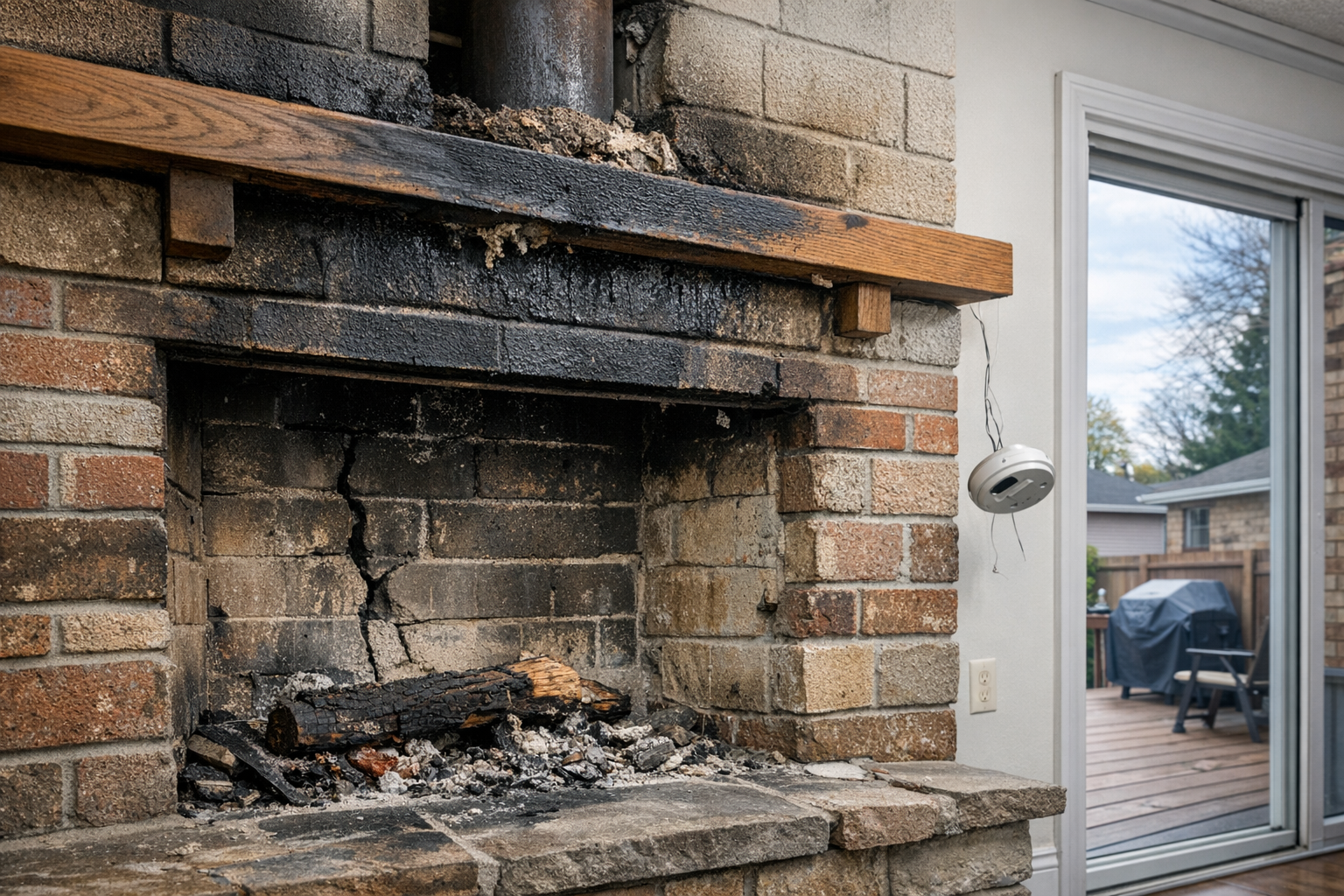
Cracked firebox panels and failing masonry inside the firebox
Cracked firebox panels, broken refractory bricks, and deteriorated mortar joints are common defects in older fireplaces. These materials are meant to contain high heat and protect nearby framing and finishes.
Once cracks open up, heat can reach areas that were never designed to handle it. That raises the risk of hidden damage behind the firebox, and it can make safe operation impossible until repairs are completed.
A common mistake is patching visible joints while ignoring movement or heat stress deeper in the firebox. If the repair material is wrong, or the damaged sections are not fully removed, the problem often returns after a short period of use.
Heat damage around mantels, walls, hearths, and trim
Discoloration, scorched trim, cracked finishes, and warped mantels can point to unsafe heat transfer. These signs matter because they may indicate missing clearances, failed insulation, or a fireplace insert that was installed too close to combustible materials.
The tradeoff is that many owners want a tighter, more finished look around the unit. If those surrounding materials crowd the opening or reduce required separation distances, appearance starts to work against safety.
- Darkened wood or paint above the opening
- Cracked tile or loose hearth materials
- Trim or finishes that feel unusually hot during use
If these symptoms are ignored, the surrounding assembly can keep degrading with every fire. In some cases, the visible damage is only a small part of a larger concealed problem.
Smoke spillage, backdrafting, and poor combustion
Smoke entering the room is not just an annoyance. It often means the fireplace is drafting poorly, the chimney is obstructed, or the house is pulling air away from the fire.
Backdrafting can be intermittent, which makes it easy to dismiss. A fireplace may seem to work on one day and spill smoke on the next, depending on outdoor conditions, chimney temperature, and how tight the house is.
In Tillsonburg homes, this issue can show up more clearly during colder weather when pressure differences are stronger. A careful fireplace chimney checklist can help identify visible clues, but smoke spillage should never be treated as a normal quirk.
Carbon monoxide indicators and ventilation concerns
Incomplete combustion can produce carbon monoxide without obvious warning. You may not always see heavy smoke or smell something unusual before exposure becomes dangerous.
Warning signs can include soot buildup, lazy flames, frequent headaches after fireplace use, or detectors that alarm near the appliance. The hard part is that these symptoms can overlap with venting defects, fuel issues, or blocked flue passages.
The consequence of getting this wrong is severe. If combustion air is inadequate or exhaust gases are not venting properly, the fireplace should not be used until the cause is confirmed and corrected.
Loose dampers, faulty doors, and worn gasketing
A damper that does not open fully can restrict draft and worsen smoke problems. A damper that does not close properly can also allow moisture and cold air into the system when the fireplace is off.
Faulty doors and worn gaskets create their own set of risks. They can upset the burn pattern, change airflow, and allow excessive heat to escape toward nearby finishes.
One common failure mode is focusing only on the visible door glass while ignoring the frame, latch tension, and seal condition. Good fireplace construction information helps show why small hardware defects can affect the whole system, not just the part you can touch.
Moisture intrusion, staining, and chimney leak warning signs
Water stains near the fireplace, musty odours, peeling finishes, and rusted metal parts often point to chimney leaks or condensation problems. Moisture can damage masonry, weaken liners, and shorten the life of dampers and doors.
The challenge is that water does not always appear where it enters. A leak near the top of the chimney can show up lower down, which leads to misdiagnosis and repeated repairs that never solve the source.
- Brown staining on ceilings or walls near the chimney
- White mineral deposits on masonry surfaces
- Rust on firebox components or damper parts
If these signs are present, the safest next step is a proper inspection of both the fireplace and chimney system before using it again.